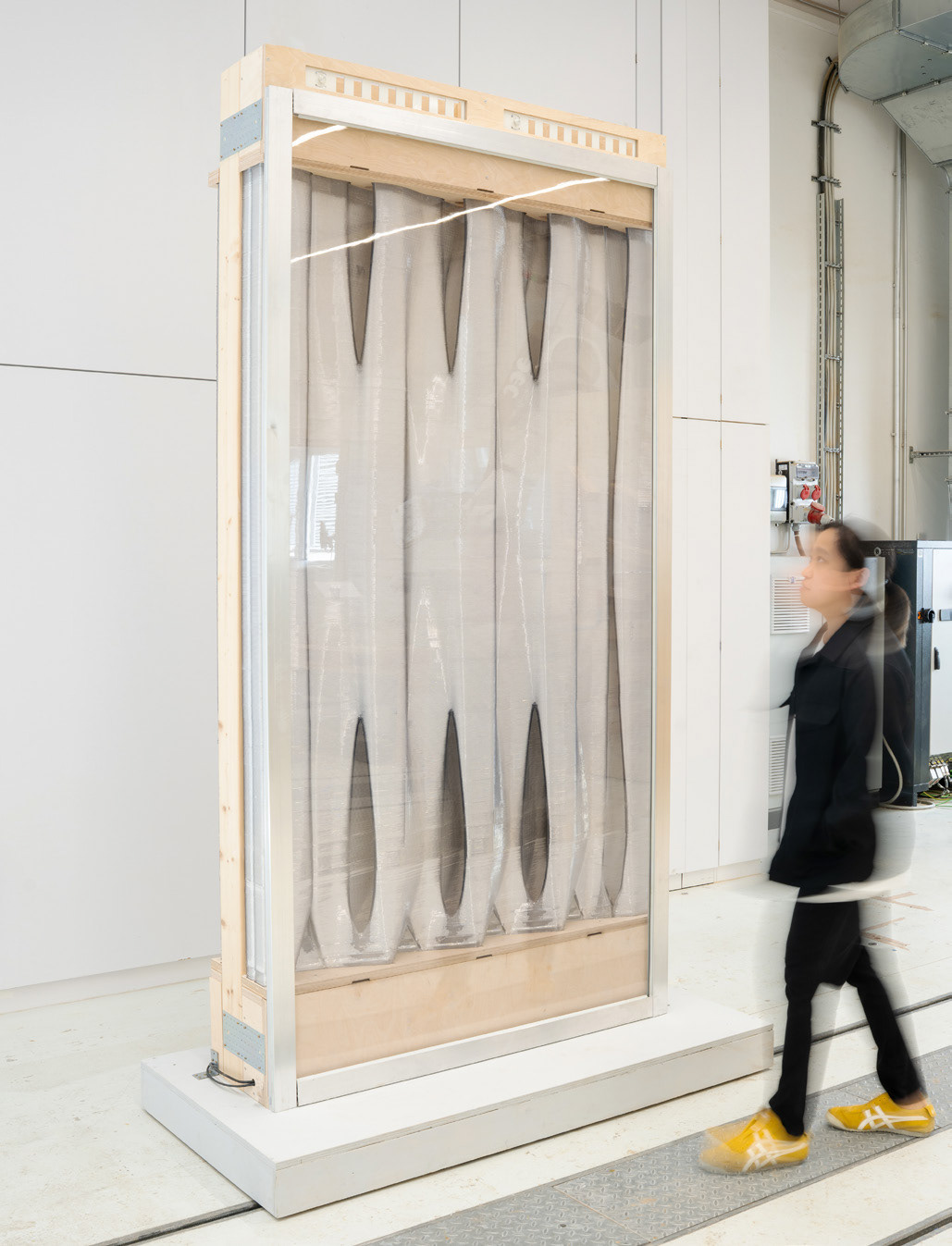
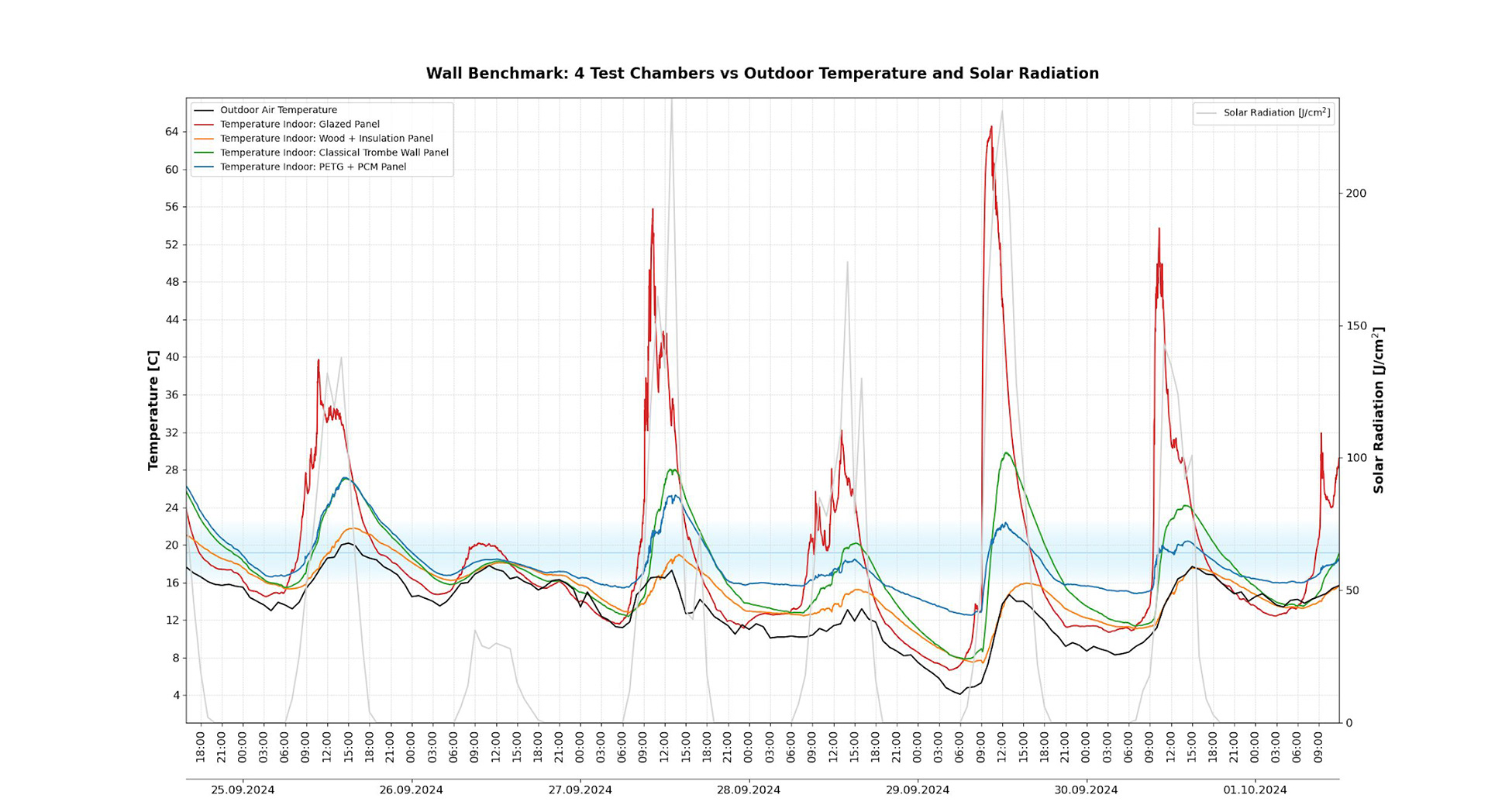
This project explores materially efficient, passively responsive wall assemblies through large-scale additive manufacturing using recycled PETG and phase-change materials (PCM). Designed for year-round indoor thermal comfort, the system integrates smart materials and fabrication methods to create thermal mass within a lightweight building envelope, thus minimizing operational energy demand.
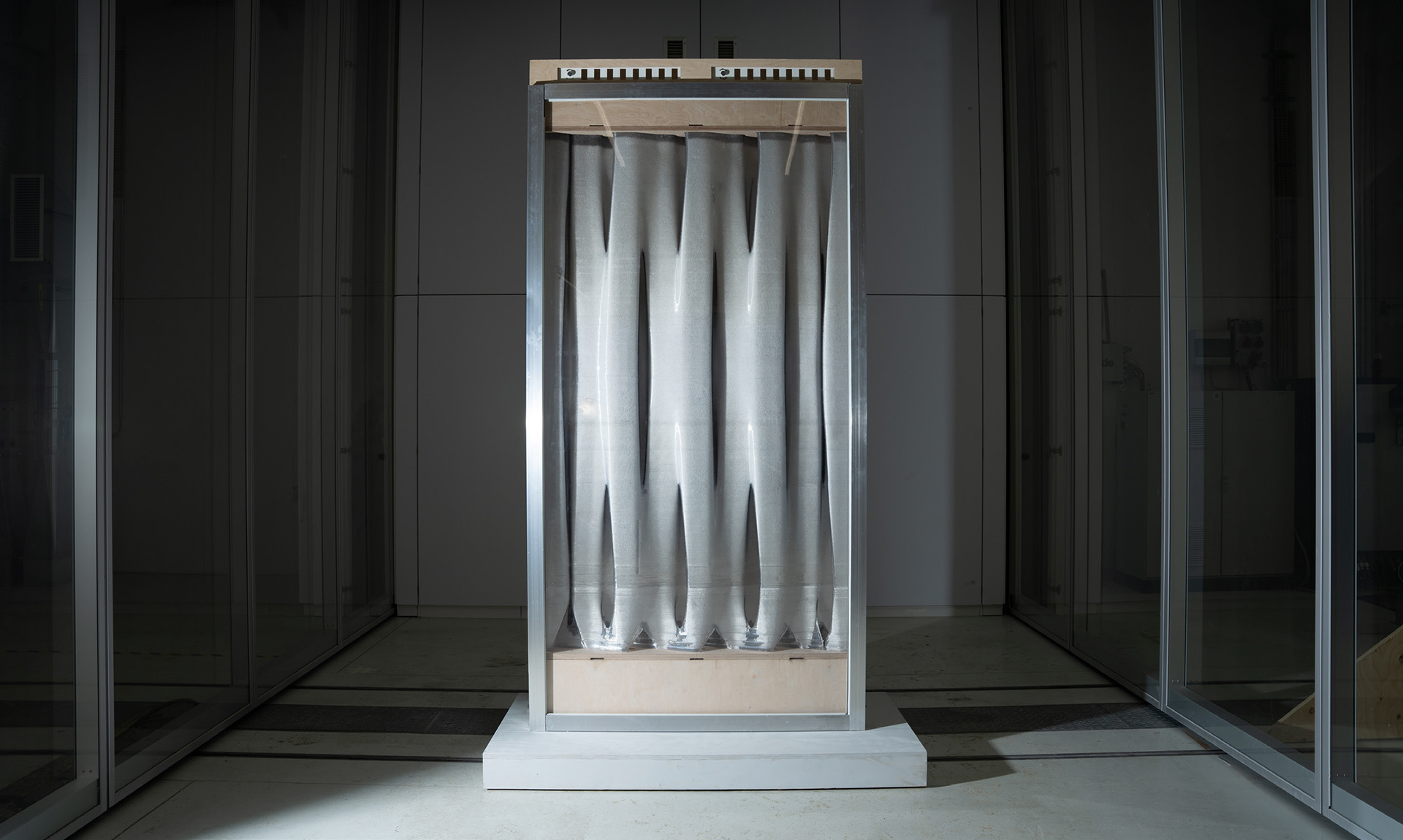
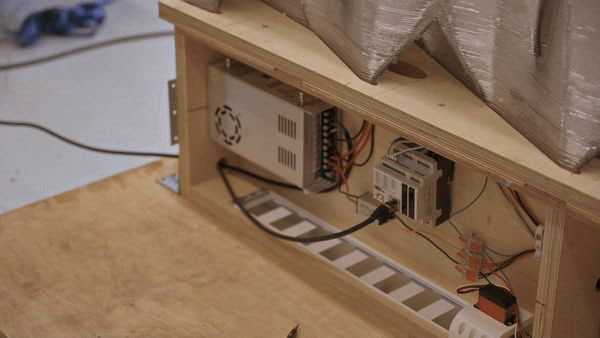
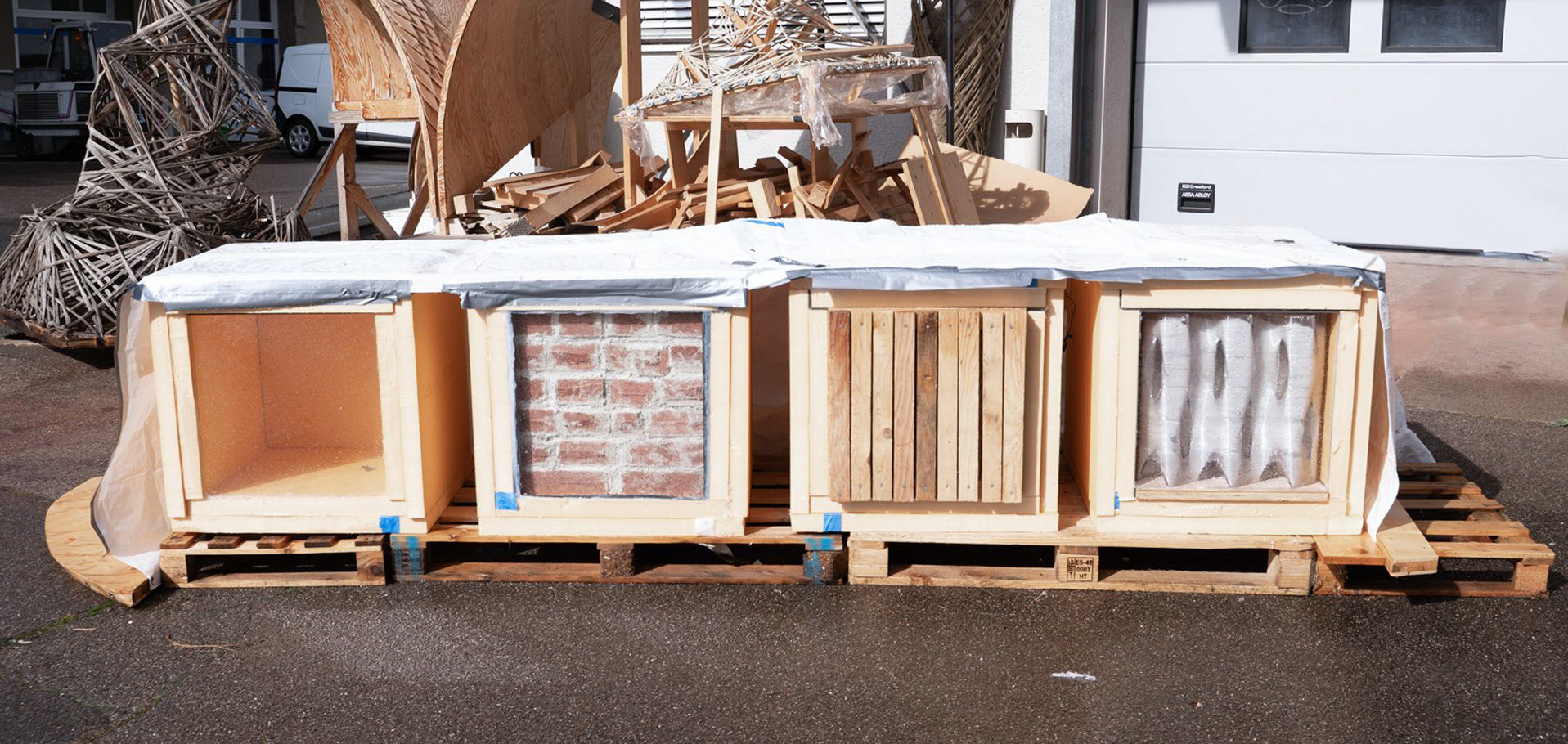
The project was intended to provide a smart and efficient solution to replace the glass panels originally designed for the ITECH 2020 Pavilion, CampusLab. Climate data was used to optimize the design for the site, located in Vaihingen, Germany. We designed a panel inspired by trombe walls, which provide thermal mass to the building to retain heat during the winter, and absorb heat from the sun during the summer. The panel was designed to have smart vents that were calibrated to the exterior and interior conditions, allowing or blocking the circulation of air when needed.
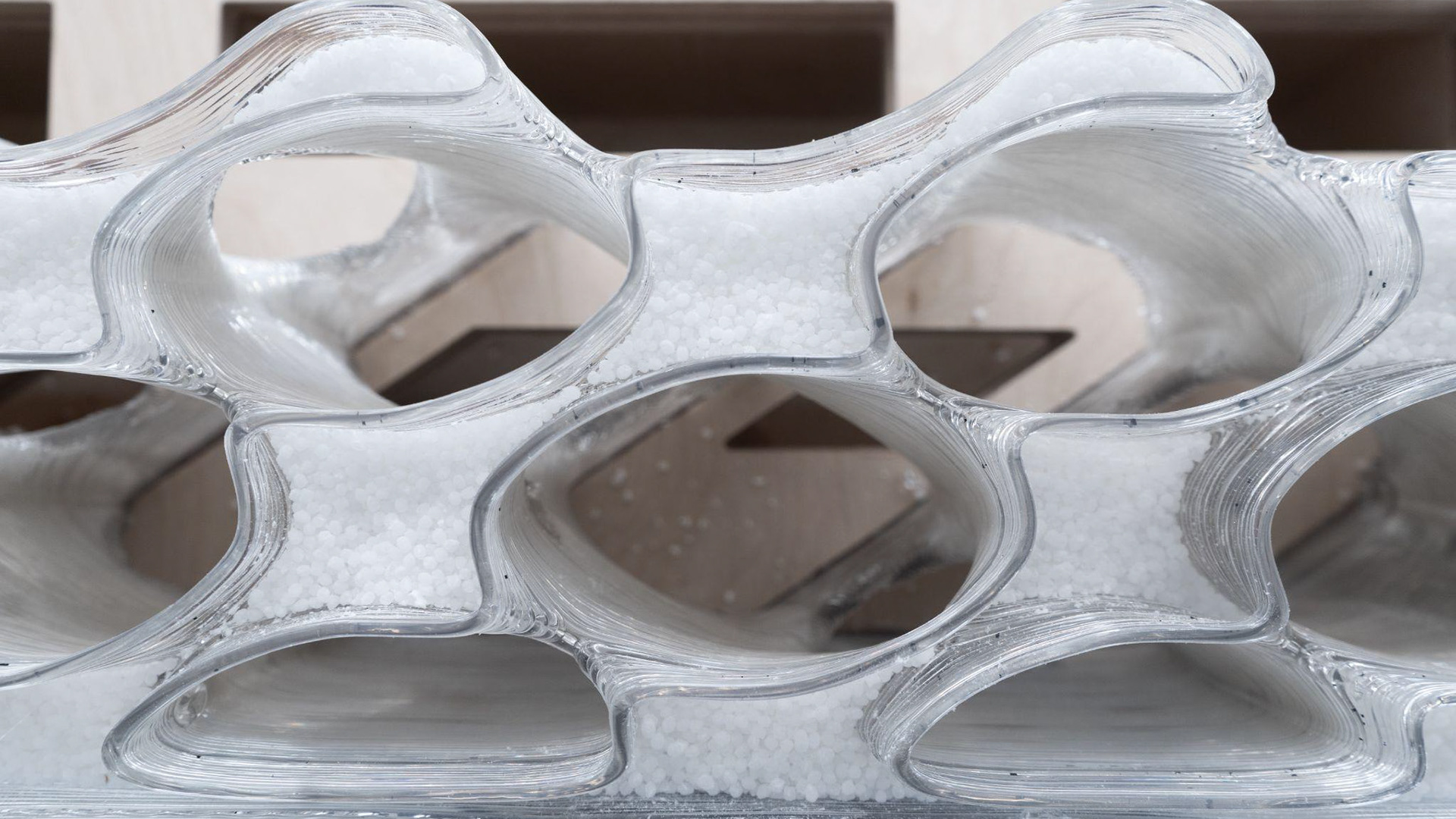
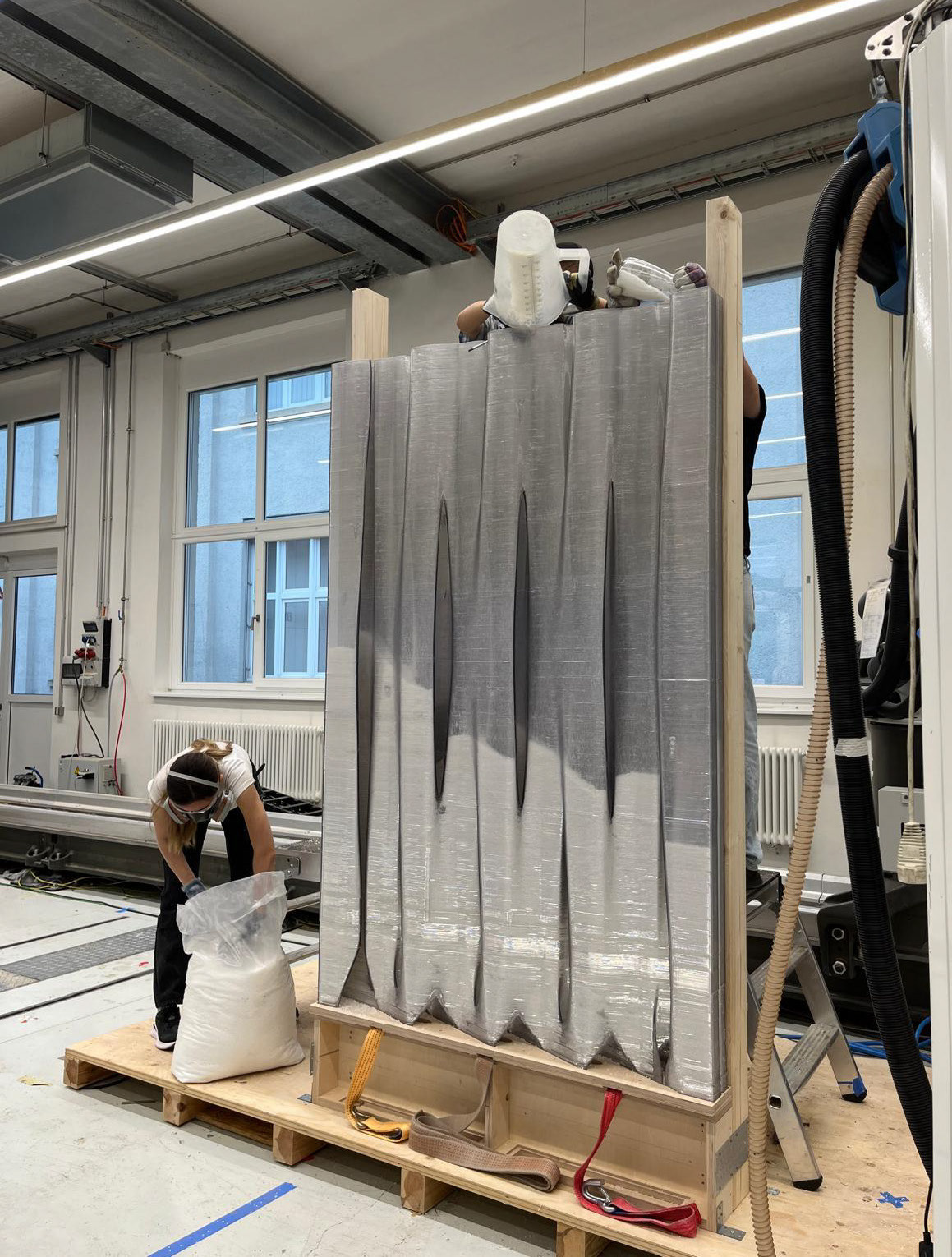
The use of large-scale additive manufacturing allows for the calibration of each panel to the site, allowing for mass customization and the ability to print around the curved corners of CampusLab. Panels can be printed, shipped to site, and filled with PCM. This infill replicates the trombe wall effect, in a lightweight way compared to traditional brick. The pourable pellets melt and solidify according to the temperature, and in this phase change store or release large amounts of heat.
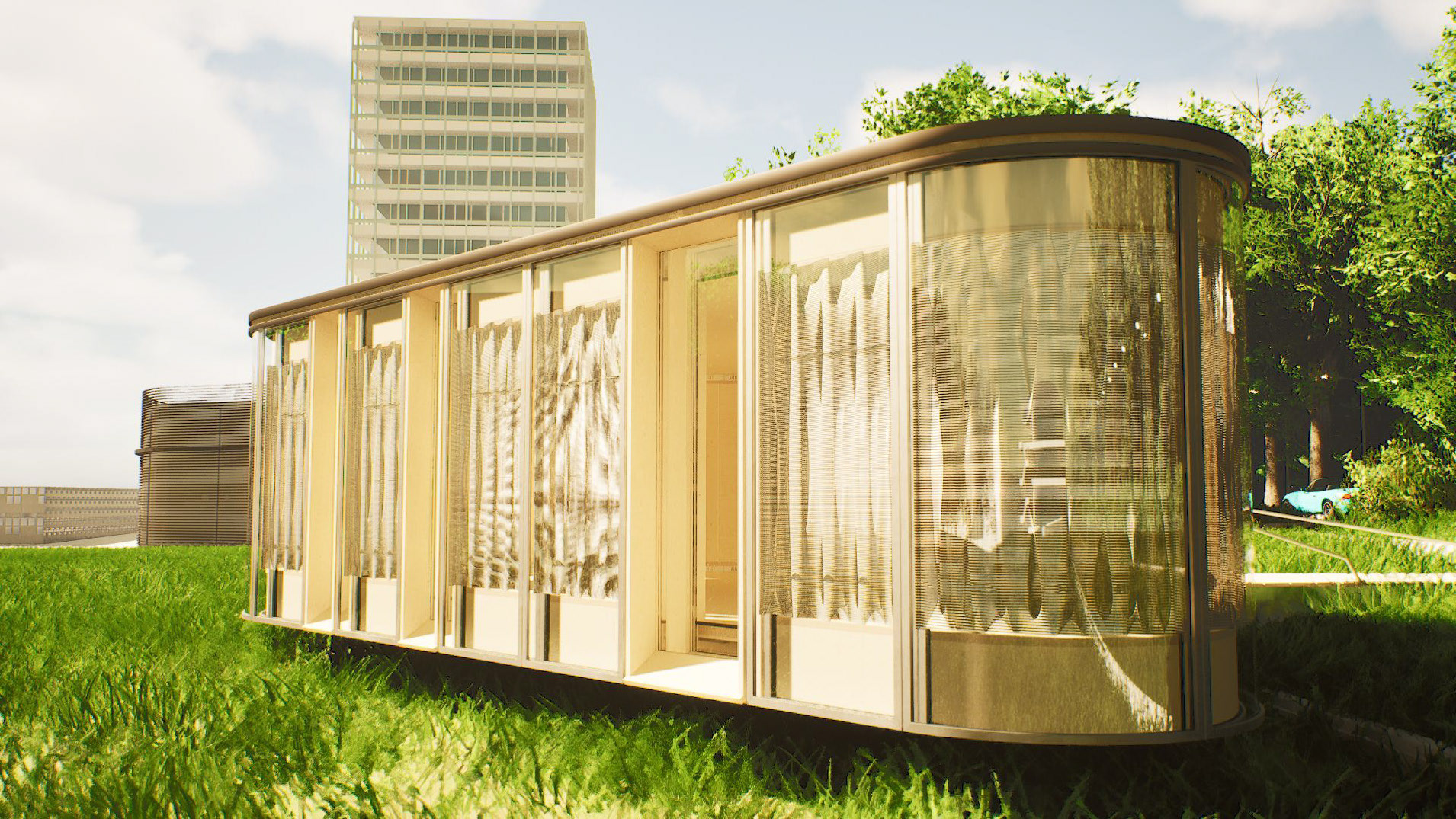
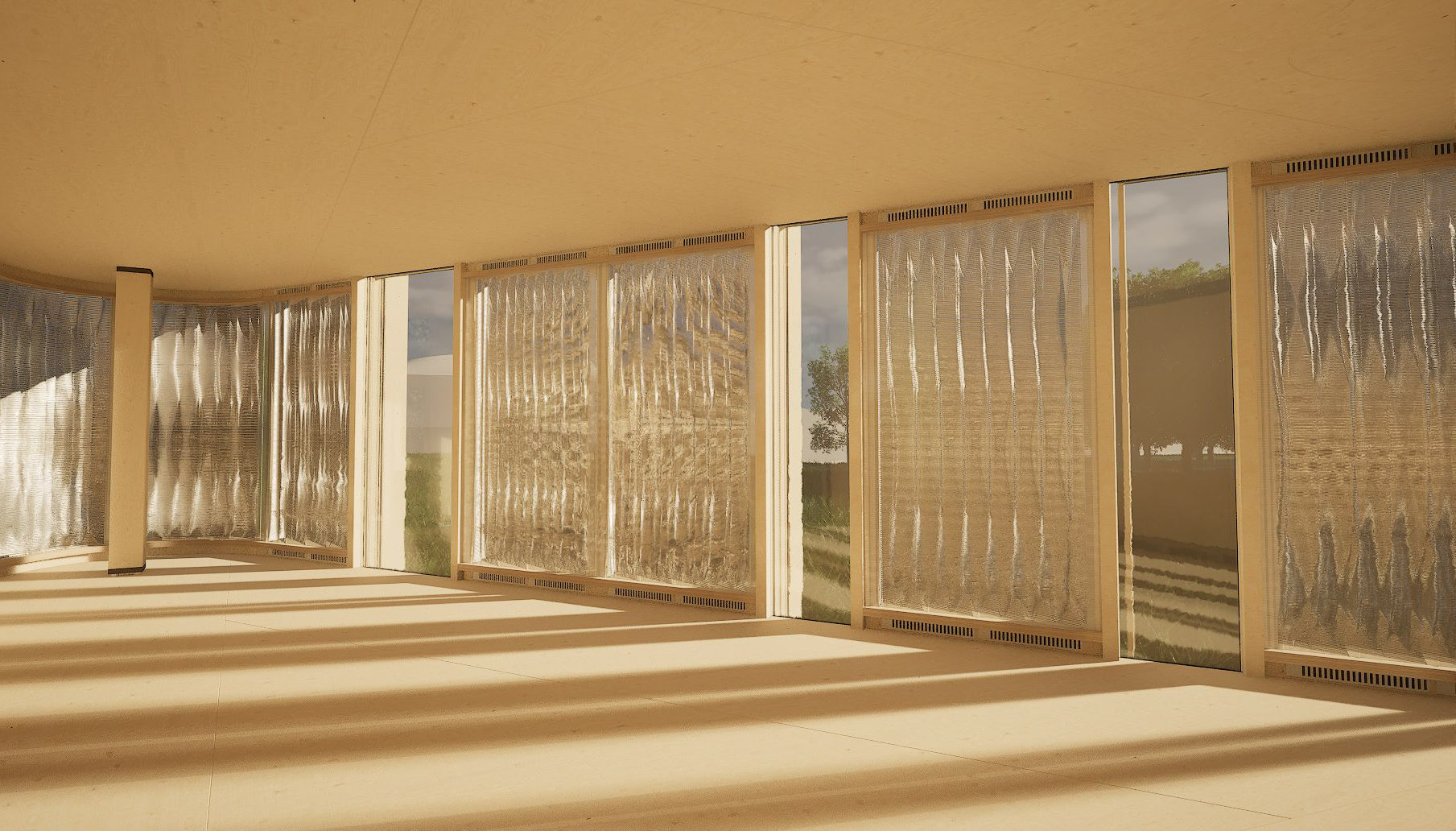
Multi-objective optimization was employed to explore triply periodic panel geometries that could be fabricated using a single continuous toolpath. Panel performance was evaluated against three critical criteria: maximizing the volume of the PCM infill cavity, maximizing the surface area available for heat exchange, and minimizing total weight and printed material usage.
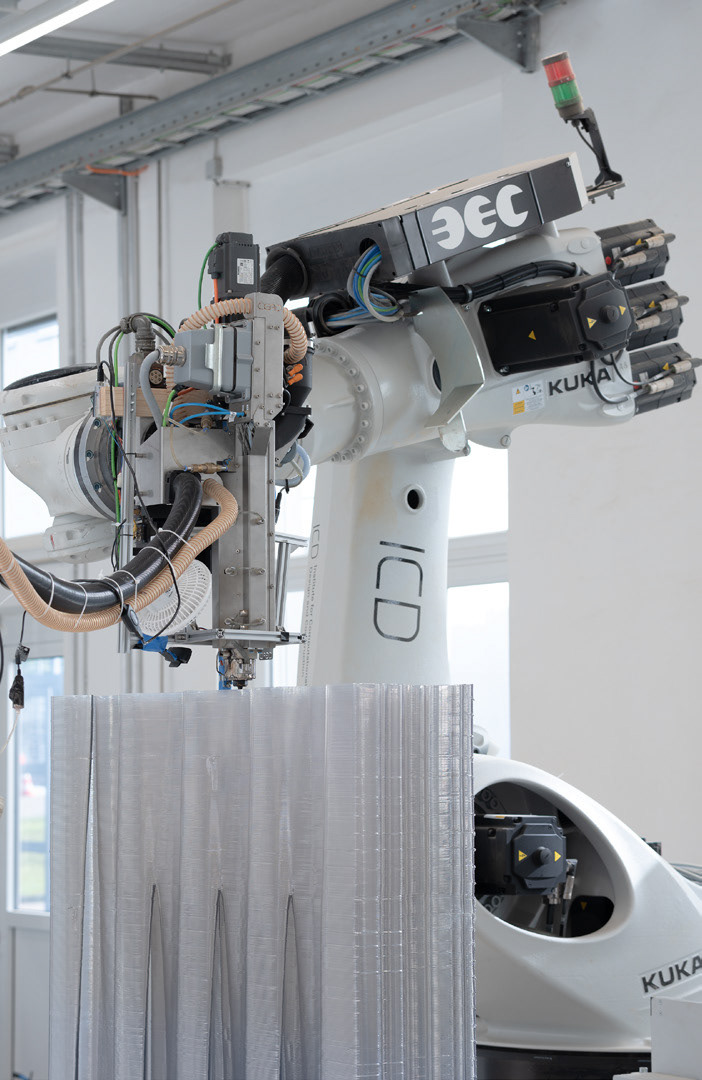
The optimized geometries were then processed through a custom slicer, which generated batches of continuous toolpaths while automatically detecting fabrication constraints such as excessive overhang angles and unsupported bridging gaps. Only valid toolpaths were translated into robotic instructions and sent to the KUKA robotic system, ensuring that the optimized designs were both high-performing and physically printable.
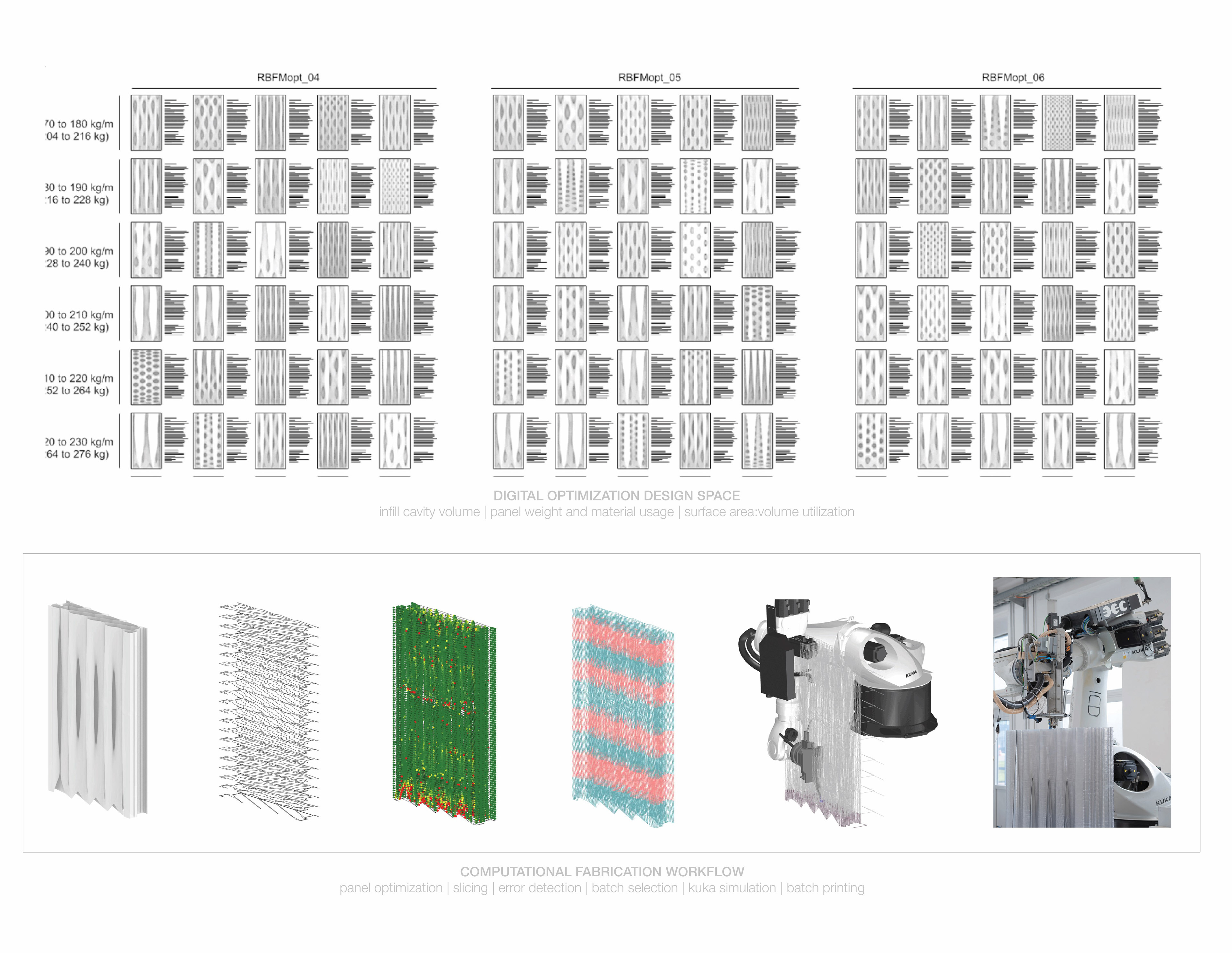
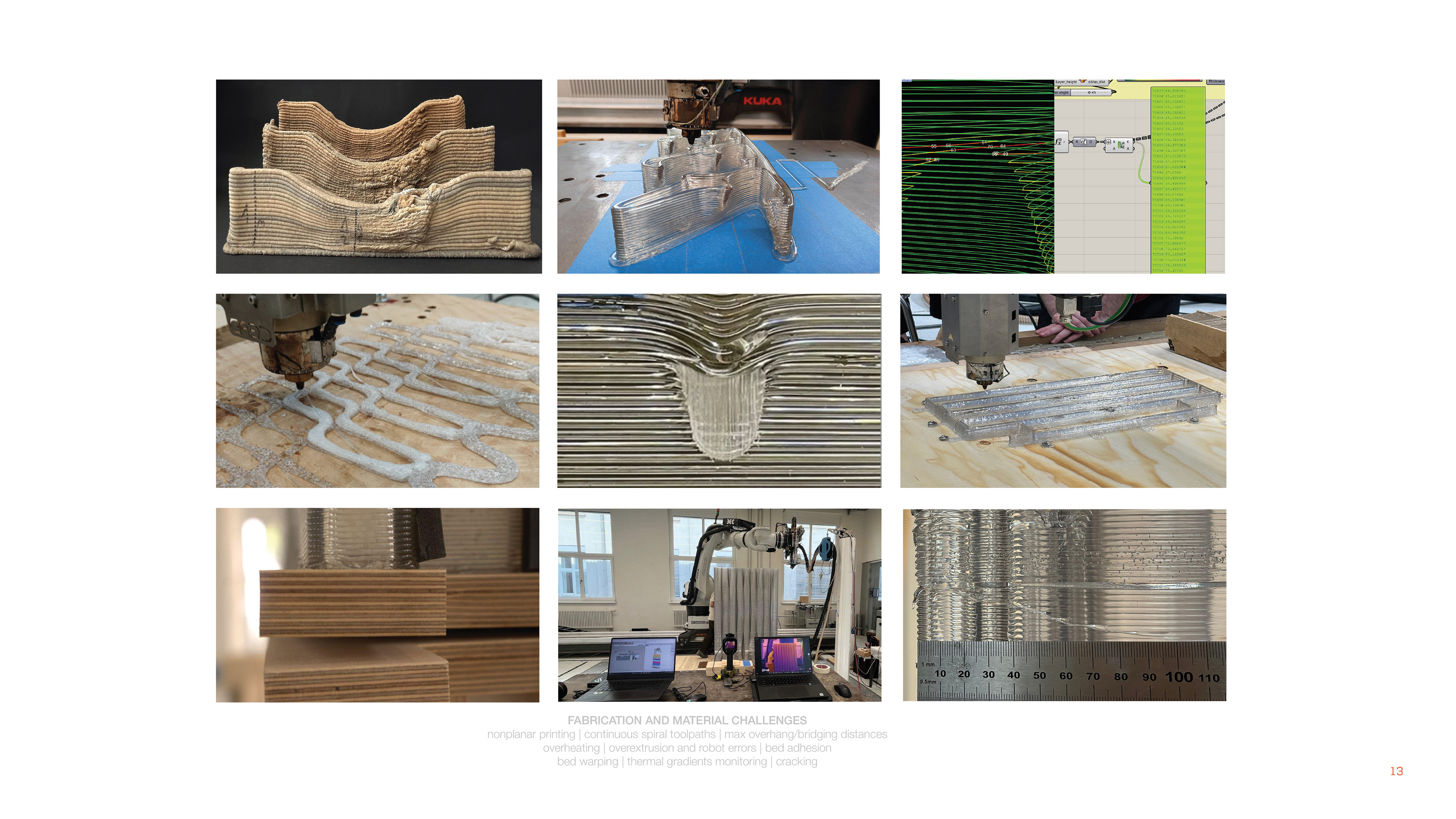
My role on the fabrication team focused on material testing, optimizing printing parameters, and addressing fabrication constraints to enable continuous single-tool path printing for a 2m-tall panel. We developed a custom Grasshopper script to identify geometric challenges, which influenced the design of the final panel. Our team helped choreograph the entire fabrication process, from panel design to printing, PCM integration, and final assembly.